
The Oil Level Is Low. How Much Should You Add?
Read the level in the right machine state, make a controlled addition and keep a useful top-up record.

In this article
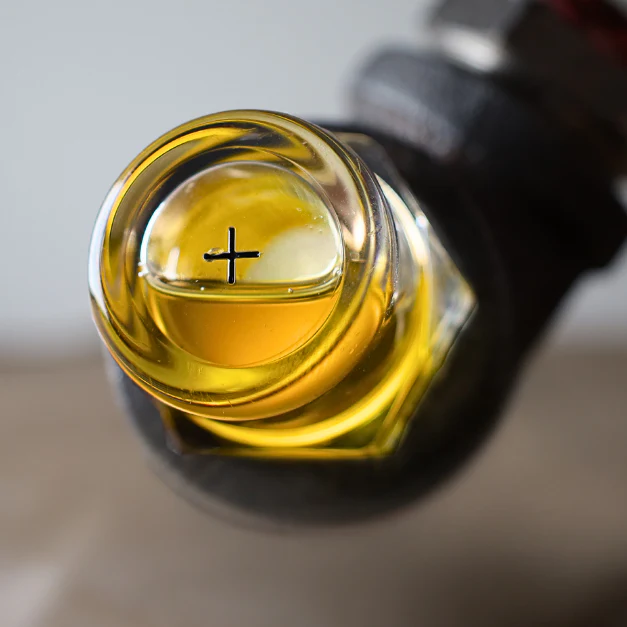
A technician sees oil below the mark, brings a full container and starts topping up. The level moves slowly, so a little more goes in. When the reading settles, the oil is above the intended level.
The mistake was not choosing the wrong brand of oil. The task lacked a clear stopping point.
A routine top-up needs three things settled before the cap comes off: the condition in which the level should be read, the approved lubricant and the point at which to stop. The quantity actually added then becomes useful maintenance information, especially when the same machine keeps asking for more.
This article covers oil sumps and reservoirs in industrial machines. Grease application, automatic lubricators and coolant systems require their own procedures.
First, confirm that the reading means low
A level is only meaningful alongside the machine state. Was it checked running or stopped? Had oil drained back? Was the equipment in the position and temperature condition specified by its maker?
Do not compare a cold, stopped reading with a mark intended for normal operation. Martin Williamson's reservoir-level guidance explains that operating and resting levels can differ because of system design and oil returning from the circuit. The direction of the difference is not universal.
The instruction at the machine should identify the approved reading condition and level reference. If either is missing, ask the responsible maintenance person before deciding how much to add. Do not create a new mark from memory of a similar gearbox.
Check that the indicator can be read reliably. A stained window, foaming oil or an unfamiliar indicator arrangement needs attention through the approved procedure. A confusing reading is not permission to keep filling until something changes.
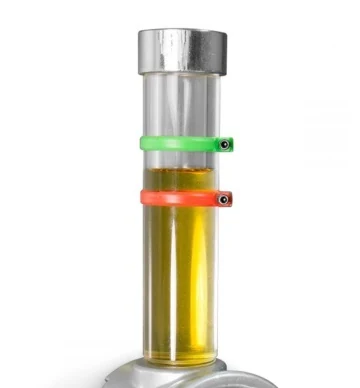
Check in the machine maker's specified condition.
Use the approved level reference, not a mark remembered from another machine.
Read the product name, not just the colour
Match the approved lubricant to the product identified on the transfer equipment and at the machine. A colour code helps recognition; it should not replace a readable identity. When the contents of a container are uncertain, hold it for checking rather than giving it a fresh label and using it.
ExxonMobil's storage and handling guidance explains how poor handling and damaged containers can expose lubricants to deterioration and contamination. Keeping the correct oil in protected, identified equipment is basic control, not paperwork for its own sake.
There is no shortcut in matching viscosity grade alone. The approved product requirement can include performance and compatibility conditions as well as viscosity. Resolve substitutions through the equipment and lubricant supplier's guidance; do not make the decision at the fill point because the usual container is empty.
Protect the short journey into the machine
The final transfer is worth a quick check, even when the oil came from a well-managed store. Inspect the container, closure and dispensing end. Confirm that the equipment is dedicated as the plant requires, clean and in serviceable condition. Keep connection surfaces protected until use.
Noria's guidance on reusable top-up containers makes an important distinction: a sealed container can still need cleaning. Dirt on the filling equipment can be introduced during the next transfer. Use an approved cleaning method and inspection schedule suited to the equipment and service, rather than assuming a closed lid proves cleanliness.
This is a pre-task check, not a request to rebuild the oil room for every top-up. If the tool is dirty, damaged or of unknown history, replace or remove it from service through the plant's process. Do not improvise with an open vessel simply to finish the round.
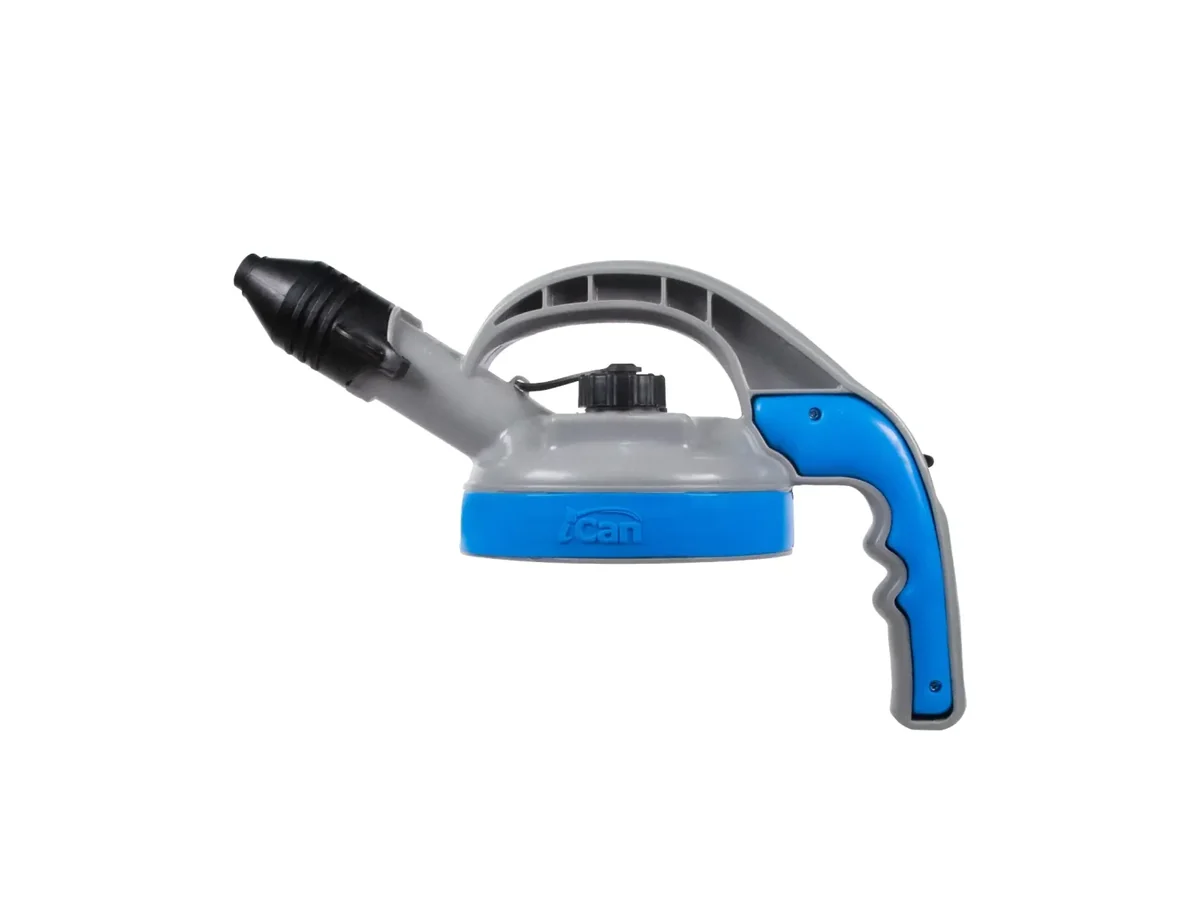
Check the closure and dispensing end before use.
Keep connection surfaces protected and follow the plant's cleaning procedure.
Set the stopping point before starting
Use the machine maker's filling method, safe access requirements and target level. Follow the plant's isolation and permit arrangements where required. This article is not authorisation to fill running equipment or open a pressurised system.
Noria's oil-addition guidance notes that the indicated level can lag during filling. Add under control, allow the reading to settle as the equipment procedure requires, and stop at the approved level. Do not empty the rest of the container into the machine for convenience.
If the expected amount produces an unexpected reading, stop and investigate through the responsible person. The problem may be the reading, the assumed starting condition or where the oil is going. Guessing at another quantity makes the situation harder to explain.
Once the task is complete, close and secure the fill point, leave the area clean and carry out the specified recheck. There is no common waiting time that is right for every sump or reservoir.
Record the amount, then look at the pattern
"Topped up" loses the most useful part of the task: how much went in. Record the actual quantity, product, asset, date and reading condition. Note an observed leak or another reason for the addition without presenting a suspected cause as confirmed.
Consider an illustrative record for one gearbox. The exact quantities are not the point here:
- A top-up after planned work is recorded against that work order.
- Another addition is needed soon after, under a comparable reading condition.
- A third addition is made, but nobody has linked the entries or assigned an investigation.
Each individual task may have restored the correct level. Together, the entries describe a question that needs an owner. Compare additions over operating time, not only calendar dates, and check changes in duty or recent maintenance before deciding that consumption has increased.
Williamson's level-management article identifies repeated top-offs as a reason to investigate possible leakage. That does not make every addition proof of a leak. Record the observation, check the cause and set an escalation route for unexplained repeat demand. Adding oil should not quietly become the permanent response.
Make the addition visible in the next oil review
Pass top-up history to the person interpreting the oil trend. A result taken after an addition is not the same event as a sample taken before it. Mobil's analysis guide explains the importance of equipment and lubricant history alongside the sample. Keep the sampling method and operating context comparable.
Reliability Engine applies a related idea to liquid cooling: review the maintenance event before accepting a new baseline. Industrial oil and data-centre coolant have different requirements. The useful connection is simply to preserve what changed and check the result, not to borrow a coolant test or limit for a gearbox.
Leave the next technician a complete instruction
Before the next round, check one frequently topped-up asset. Can the technician find the required machine state, approved lubricant, target level and recheck instruction? Is there a place to record the amount, and a person to contact when the demand is unusual?
Fix the missing instruction first. The aim is a controlled addition with a useful record, not merely a full reservoir and an empty container.