
New Oil Is Not Proof of Clean Oil
Before the first fill, verify the oil's identity, the delivery condition and the evidence required by the written release rule. Then choose the permitted action.
In this article
A sealed drum with a familiar label can look ready for use, especially when production is waiting.
New only means unused oil as supplied. Before release, verify identity and package condition every time, then apply the written, risk-based requirements for particle cleanliness, water and any other critical property.
Use a release gate: hold the delivery, verify the required evidence and choose the permitted disposition. Complete the gate before first fill, match the verification effort to the risk and record the approver.
New, clean and conforming are three different claims
Treat new, clean and conforming as separate claims. Each requires different evidence.
New
The oil is unused. This says nothing by itself about what entered the container during filling, storage, transport or handling.
Clean
A representative sample meets the stated contamination target when tested by the stated method.
Conforming
The delivery satisfies the agreed requirements for identity, condition and documentation, so the written rule permits release.
Unused oil may still lack release evidence, meet the particle target while failing the viscosity requirement, or match the order but arrive in damaged packaging. Check each claim separately.
Standards help define parts of that evidence. For example, ISO 11158:2023 specifies minimum delivery requirements for new mineral-oil hydraulic fluids in the stated categories within its scope. ISO 4406:2021 provides a code for reporting solid-particle contamination. Neither document selects an incoming-release rule for every plant and every asset. 1 2
Write the release rule before the truck arrives
Define the comparison limit, test method and disposition before testing. Record them in the purchase specification, supplier agreement or controlled site procedure. For a critical lubricant, address these six questions.
- 1
What exactly was ordered?
State the product, viscosity grade, required approvals and the rules for any approved equivalent. “Hydraulic oil” is not an identity.
- 2
What condition must be met?
Define the particle-cleanliness target, water limit and any other property that matters to the application. Base the target on OEM guidance, the most contamination-sensitive component and plant risk. Do not reuse a target from an unrelated application. 12
- 3
How will it be measured?
Name the test method, reporting units, sample point and sampling condition. A target without a method invites two laboratories to answer two different questions.
- 4
What represents the delivery?
Define whether the lot, tanker compartment, tote or individual container is the release unit and how samples will be selected from it.
- 5
Who may release it?
Name the role with release authority. If production needs oil urgently, escalate the timeline without changing the criteria.
- 6
What happens when evidence fails?
Write which failures may be conditioned and retested, which require quarantine, and which require rejection or a supplier dispute.
LubeServ release gate
Choose the path after verification
- 1ReceiveCheck delivery against the order
- 2HoldDo not issue to production
- 3VerifyIdentity, package and required condition
After conditioning, keep the oil on hold until the representative retest passes the verification gate.
Receive first; release later
Mark held stock in the quarantine area, the ERP or both so it cannot be issued. Record the lot or batch, receipt date, status and owner on the hold label. Verbal instructions are too easy to miss or override.
Start with documented identity and traceability
Match the purchase order, product name, viscosity grade, supplier, container count, batch or lot and certificate details. Check that the certificate belongs to the delivered lot and reports the properties required by your agreement. A certificate is useful evidence; it is not a substitute for matching the physical delivery.
Then inspect the package
Look for a broken or missing tamper seal, damaged bung, wet cap, corrosion, dents at a closure, leakage, damaged tote valve, illegible label or signs that containers from different lots have been mixed. Record what you see with photographs where the site procedure allows.
If identity, possible water entry or containment remains unresolved, keep the material isolated and investigate. Additional samples may add evidence, but they cannot restore missing traceability or prove what happened before receipt.
Stop the release immediately when
- The product or viscosity grade does not match the order
- The lot cannot be tied to the required documentation
- A seal, closure or delivery connection is compromised
- There is visible water, leakage, corrosion or suspected cross-mixing
- The required evidence is missing and the written rule does not allow conditional receipt
Collect a representative incoming sample
An incoming sample must represent the release unit. Contamination from the bottle, valve, thief, hose or local environment can distort the result, while a weak sampling plan can miss contamination elsewhere in the lot.
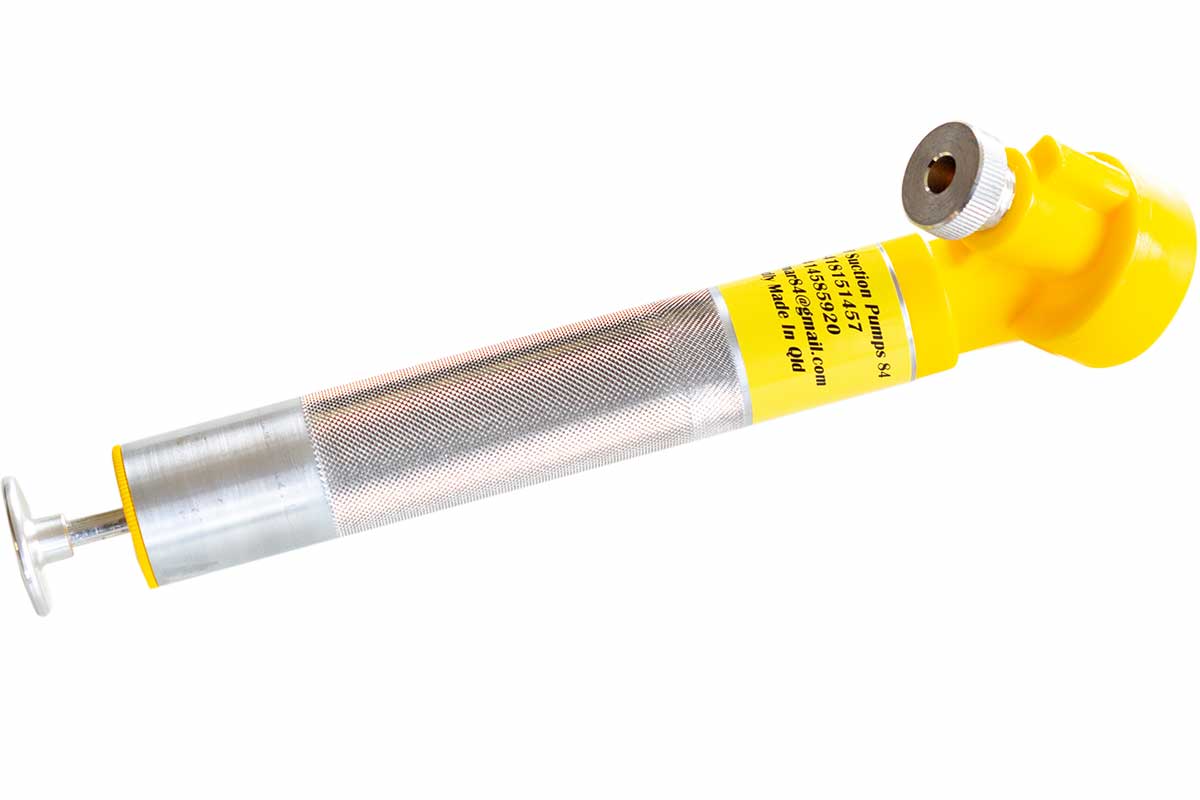
Define the method with the supplier and laboratory. Use a bottle cleanliness level suitable for the analysis; ISO 3722 describes qualification and control of sample containers used for hydraulic-fluid contamination analysis. 3 Keep the closed bottle protected until the point is ready, flush the sampling path by the documented method, avoid touching the cap interior or bottle mouth, fill and cap promptly, and label the sample immediately.
ISO 4021 covers sampling from the lines of an operating hydraulic system. It does not cover a sealed delivery. 4 Use the receiving method written for the delivery format and release unit. Before borrowing a machine-sampling rule, prove that it will produce a representative incoming sample.
If a result will decide acceptance or rejection, preserve the evidence chain. Record who sampled, where, when and under what condition; retain the required counter-sample; and follow the agreed process for precision, dispute and disposition. ISO 4259-2 addresses specification conformance and conflicting results for homogeneous petroleum and related products where its scope and precision data apply. Its scope excludes nonhomogeneous products, so use a separately agreed procedure for spatially variable particle or water disputes. 5
Match each result to the question it can answer
Select tests tied to the written release requirements. Use the table to plan the evidence, then apply the methods and limits in the site specification.
| Evidence | What it helps establish | What it does not establish alone |
|---|---|---|
| Documented identity and lot matchOrder, label, certificate | The order, label, lot and certificate correspond to the requested material. | Chemical or formulation identity, particle cleanliness, water content or undamaged containment. |
| Kinematic viscosityASTM D445 6 | Measured viscosity at the stated temperature for comparison with the product requirement. | Complete formulation identity or overall contamination level. |
| Particle countISO 11500 / ASTM D7647 | Particle concentrations at the reported size thresholds and, when specified, the resulting cleanliness code. | Why particles are present, water condition or chemical identity. |
| Water by Karl FischerASTM D6304 9 | Water concentration by the selected procedure. | Particle cleanliness or whether a filter cart can remove the measured water. |
| Elemental patternASTM D5185, when applicable 10 | A pattern of selected additive and contaminant elements for comparison with a suitable reference. | Complete formulation identity or the presence of every possible contaminant. |
Typical incoming evidence
Documented identity and lot match
Order, label, certificate
- Helps establish
- The order, label, lot and certificate correspond to the requested material.
- Does not establish
- Chemical or formulation identity, particle cleanliness, water content or undamaged containment.
Kinematic viscosity
ASTM D445 6
- Helps establish
- Measured viscosity at the stated temperature for comparison with the product requirement.
- Does not establish
- Complete formulation identity or overall contamination level.
Particle count
ISO 11500 / ASTM D7647
- Helps establish
- Particle concentrations at the reported size thresholds and, when specified, the resulting cleanliness code.
- Does not establish
- Why particles are present, water condition or chemical identity.
Water by Karl Fischer
ASTM D6304 9
- Helps establish
- Water concentration by the selected procedure.
- Does not establish
- Particle cleanliness or whether a filter cart can remove the measured water.
Elemental pattern
ASTM D5185, when applicable 10
- Helps establish
- A pattern of selected additive and contaminant elements for comparison with a suitable reference.
- Does not establish
- Complete formulation identity or the presence of every possible contaminant.
Particle-count methods are not interchangeable. ISO 11500 applies to clear, homogeneous, single-phase hydraulic-fluid bottle samples. ASTM D7647 uses dilution to address viscosity, free-water and soft-particle interference, but samples with visible particles or samples that remain opaque after dilution may still be unsuitable for its optical method. Select the method with the laboratory for the actual fluid and interference risk. 7 8
A valid release decision connects the result to the product, sample, method, limit and permitted action.
Set the disposition and record the decision
01 / Release
Accept
All identity, package, document and test requirements pass. Record the approver and release the inventory.
02 / Correct
Condition + retest
One understood, correctable requirement is not met. Keep the oil on hold, apply the approved process and retest before release.
03 / Investigate
Quarantine
Evidence is missing, conflicting or disputed. Isolate the release unit, preserve the record and assign the next decision.
04 / Return
Reject
The product is wrong, the containment failure has no approved recovery path, or the failed condition cannot be corrected. Prevent use, notify the supplier and retain the disposition evidence.
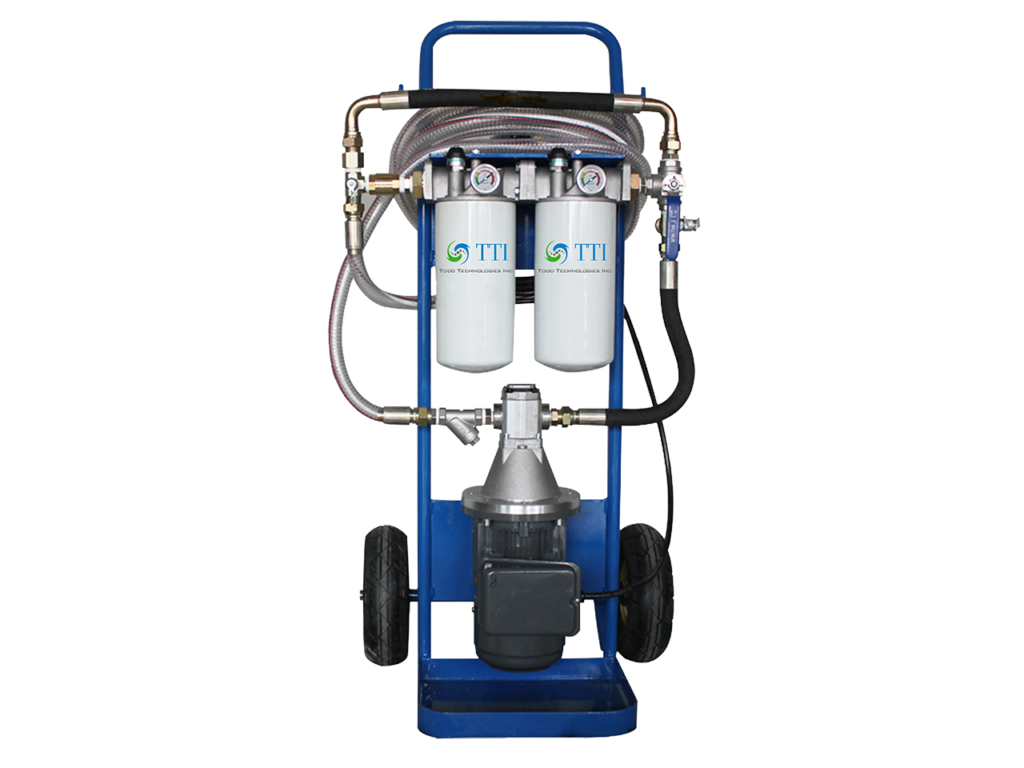
Use conditioning only when the failed requirement is understood and the selected equipment can address it. Particle filtration does not correct product identity or formulation. Water removal depends on the form of water and the purification technology. ISO 16889 evaluates hydraulic filter-element performance under defined laboratory conditions. ISO 18237 addresses water-separation performance for dehydrators. Field performance still depends on the installed setup, fluid and operating conditions. 11 13
Protect the oil after release and through the first fill
Receiving controls can be undone during transfer. A contaminated fill fitting, shared hose or open reservoir can contaminate compliant oil before it reaches the machine.
Move released oil through clean, capped and correctly identified equipment. Use dedicated or formally controlled pumps, hoses and connectors. Keep the transfer closed where practical. If filtration during transfer is part of the asset plan, record the filter element, compatibility, setup and flow path. Protect the machine fill point before making the connection.
For new equipment or systems opened during maintenance, include contamination already present in the reservoir, pipework and components. Follow the commissioning procedure for flushing or cleaning, then verify at the representative system sample point.
The broader route matters after the first fill: storage, transfer, reservoir breathing and routine sampling can all change lubricant condition. See Where Clean Oil Gets Dirty for the full handoff audit.
Record the release decision
Complete the record at receiving so the decision can be reconstructed later. Adapt this template to the site procedure and contract.
Open the field record
Field template
Incoming Lubricant Release Record
| Requirement | Method / source | Limit | Result | Status |
|---|---|---|---|---|
| Product identity | Order + label + certificate | Exact match or documented approved equivalent | Pass / Hold | |
| Viscosity | Pass / Hold | |||
| Particle cleanliness | Pass / Hold | |||
| Water | Pass / Hold | |||
| Other application requirement | Pass / Hold |
Adapt this template to the applicable OEM requirements, site procedures and supplier agreements.
Start with one critical lubricant
Choose one lubricant feeding a high-consequence machine. Write its requirement, create a visible hold status, agree the sampling and test methods, and assign release authority. Extend the method after the team can execute it consistently.
Apply the gate to the next delivery. The release record should show that the oil is correctly identified, meets the required condition and is approved for the intended use.
Questions teams ask before the first fill
Does a certificate of analysis prove that the delivered oil is clean?
Not by itself. A certificate may confirm selected properties for a stated batch, but it does not prove that the container received at your site is undamaged, correctly identified or within your asset-specific particle and water limits. Match the document to the delivery, inspect the package and apply the written release rule.
Should every incoming lubricant delivery be laboratory tested?
Not necessarily. Use a risk-based plan. Product identity and package condition should be checked every time; condition testing can vary with asset criticality, delivery format, supplier history, lubricant sensitivity and the consequence of releasing the wrong or unacceptable oil.
Can filtration correct an incoming oil that fails its release check?
Only when solid particles are the identified, correctable nonconformance and the selected filter system is compatible. Filtration cannot correct the wrong lubricant, restore a compromised additive system or automatically remove every form of water. Use a validated process for the failed condition and release only after a representative retest meets the requirement.
Is there one ISO 4406 cleanliness target for all new oil?
No. ISO 4406 is a reporting code, not a universal target selector. The acceptance target should be written for the machine and lubricant, taking account of the most contamination-sensitive component, OEM guidance, operating environment and consequence of failure.
Where should an incoming lubricant sample be taken?
Use the delivery point and method defined in the receiving procedure. The sample must represent the lot being released without adding contamination from the bottle, valve, hose or surrounding area. Record the lot, container, point, method and sampling condition so the result can be interpreted and repeated.
When should an incoming delivery be rejected instead of quarantined?
Reject when the commercial or technical requirement clearly allows no recovery path, such as the wrong product, unresolved identity, unacceptable damage or a confirmed result outside a non-correctable limit. Quarantine when evidence is incomplete, disputed or awaiting investigation. Your purchase specification should define both decisions before the truck arrives.
References
View 13 technical references
- ISO 11158:2023. Lubricants, industrial oils and related products (class L), Family H (hydraulic systems): specifications for categories HH, HL, HM, HV and HG.
- ISO 4406:2021. Hydraulic fluid power, fluids: method for coding the level of contamination by solid particles.
- ISO 3722:1976. Hydraulic fluid power, fluid sample containers: qualifying and controlling cleaning methods.
- ISO 4021:1992. Hydraulic fluid power, particulate contamination analysis: extraction of fluid samples from lines of an operating system.
- ISO 4259-2:2026. Petroleum and related products, precision of measurement methods and results, Part 2: interpretation and application of precision data in relation to methods of test.
- ASTM D445-26. Standard Test Method for Kinematic Viscosity of Transparent and Opaque Liquids (and Calculation of Dynamic Viscosity).
- ISO 11500:2022. Hydraulic fluid power: determination of the particulate contamination level of a liquid sample by automatic particle counting using the light-extinction principle. See also ISO 11500:2022/Amd 1:2026.
- ASTM D7647-24. Standard Test Method for Automatic Particle Counting of Lubricating and Hydraulic Fluids Using Dilution Techniques to Eliminate the Contribution of Water and Interfering Soft Particles by Light Extinction.
- ASTM D6304-25. Standard Test Method for Determination of Water in Petroleum Products, Lubricating Oils, and Additives by Coulometric Karl Fischer Titration.
- ASTM D5185-26. Standard Test Method for Multielement Determination of Used and Unused Lubricating Oils and Base Oils by ICP-AES.
- ISO 16889:2022. Hydraulic fluid power, filters: multi-pass method for evaluating filtration performance of a filter element.
- ISO 12669:2017. Hydraulic fluid power: method for determining the required cleanliness level (RCL) of a system.
- ISO 18237:2017. Hydraulic fluid power: method for evaluating water separation performance of dehydrators.
Use the editions, limits and methods required by your current contract, OEM guidance and laboratory scope. The standards above define specific requirements, methods or performance tests; they do not create one universal release specification.
New LubeServ articles
Get practical reliability guidance by email
We will email you only when a new article is published. Unsubscribe at any time.