
 By
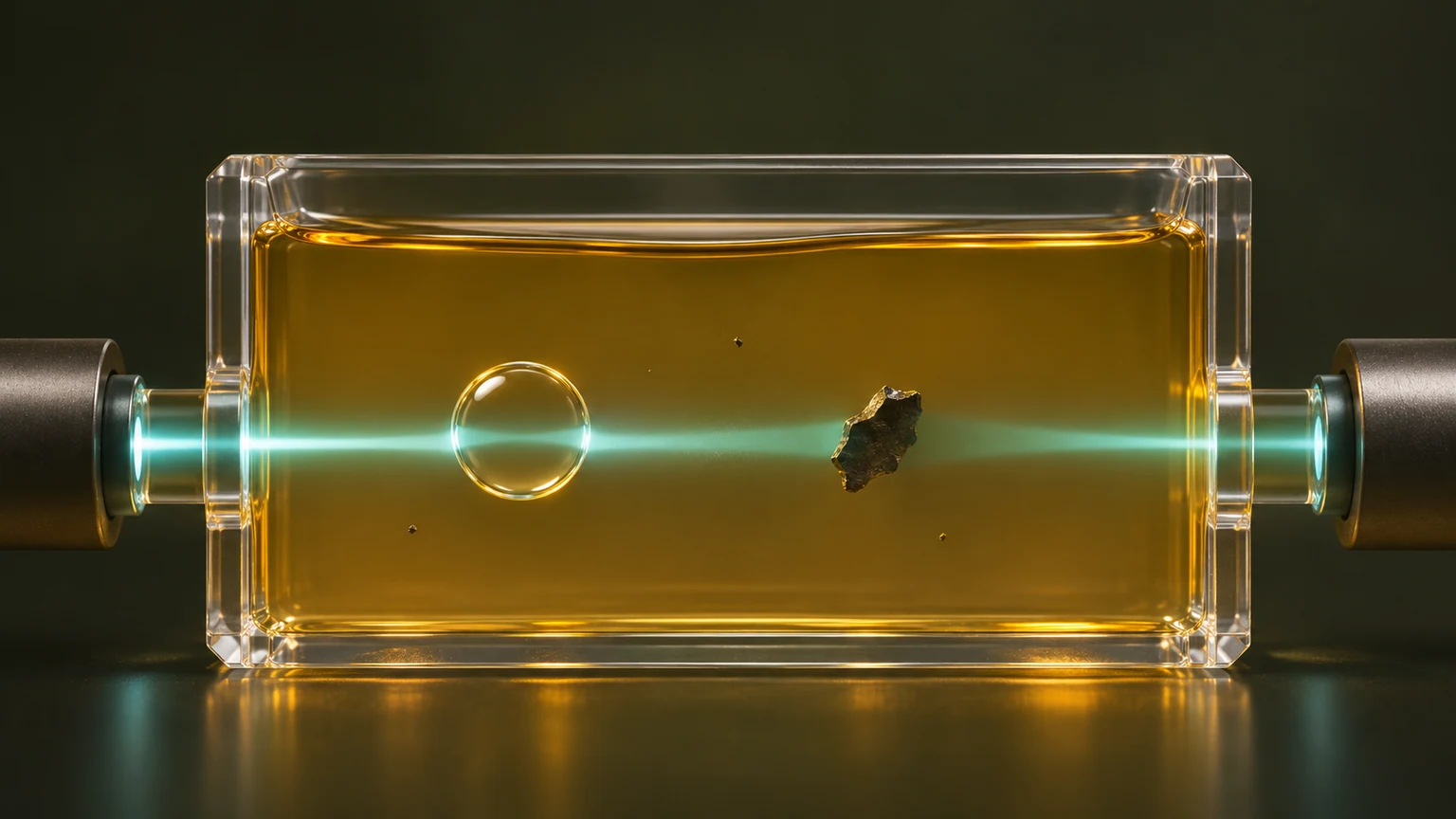
Suppose a bottle of hydraulic oil has been sitting on the bench. The first draw gives 1,140 counts per millilitre in the ≥6 µm(c) channel. Someone mixes the bottle and draws again before removing the air. Now the counter reads 2,680. Both numbers came from the same bottle. Which one tells you what was circulating in the machine?
Look at what happened between the two draws. While the bottle stood, some particles could settle below the intake. Mixing can bring them back up and introduce bubbles. An optical counter records interruptions in a beam of light. A passing bubble can register alongside solid debris. The instrument gives you a count. The bottle's preparation history helps you interpret it.
What the next two draws tell you
Continue the illustrative example. The lab takes two portions from the retained bottle and prepares each using the specified mixing and air-removal procedure. One reads 1,740, the other 1,710, in the same channel. Their average is 1,725. The two readings differ by 30 counts per millilitre, about 1.7% of their average. Compare that difference with the repeatability criterion for the method in use.

It is tempting to take 1,725 away from 2,680 and enter the difference as 955 bubbles per millilitre. There is a hitch. The distribution of solids could have changed between those draws as well. Nothing in these counts tells you which interruptions came from air.
The timing matters in both directions. Mix the oil and skip air removal, and bubbles can travel through the sensor. Wait too long after preparation, and larger particles can settle again. Beckman Coulter describes both effects in its guidance for hydraulic samples. Use the preparation and timing specified for your fluid, instrument and method.
Rerun the bottle or go back to the machine?
Ask the person who took the sample where and when they filled it. If the bottle came from the agreed point while the machine was in its usual operating condition, and the retained sample is still suitable, the lab can investigate preparation with another run. Keep the original results alongside the repeats and record how each portion was handled.
If no one can confirm the sampling point, two close results still leave you guessing about the machine. Collect a fresh sample from the agreed point and identify it separately. The same applies when the job calls for an independent machine sample. Running the original bottle again answers a different question.
A cloudy sample deserves a word with the lab before another count. ISO 11500 covers clear, homogeneous, single-phase hydraulic fluid. ASTM D7647 describes a dilution method for applicable oils when water or some soft particles would interfere. Ask which method fits the fluid and have it recorded with the results.
Back at the filter cart, the crew needs one final piece of information. How does the full set of properly prepared counts, or the reported cleanliness code, compare with the job's agreed limit? The example gives only one size channel. Keep that distinction on the job sheet before anyone calls the oil clean or orders another filtration pass.
References
- Beckman Coulter explains what happens during agitation, air removal and the wait before counting. Hydraulic Particle Counter Sample Preparation
- ISO sets out which hydraulic-fluid samples fall within the light-extinction method. ISO 11500:2022
- ASTM describes the scope of its dilution method for water and interfering soft particles. ASTM D7647-24
- LubeServ gives the sampling and acceptance context for a filter-cart cleanup. When Is the Filter Cart Finished?